

Looking for a gift this holiday season? Here are some suggestions from our staff at the MSU Press for great books to gift to friends and family! Use code MSUP25 for 20% off and free shipping through the new year!


This Magnetic North
Candid Conversations on a Changing Northern Michigan
By Tim Mulherin
$34.95
260 Pages
What happens when a place is so beautiful that everyone wants to go there—and then they stay? This book explores a phenomenon occurring around Michigan’s Great Lakes and other high-demand scenic locations across the country: natural landscapes are undergoing profound human and climatological change as people pick up their lives and move to bucolic locations. The Grand Traverse region in northwest lower Michigan has been one of the most impacted regions in the state, with the population increase accelerated by the pandemic and climate change. The impact of this growth is explored through field observations and interviews involving dozens of born-and-raised locals, “boomerangers” (those who grew up, left, then returned), and relocators. The author explores the tensions between newcomers and “natives.” Interviewees include tourist industry leaders, conservationists, business owners, public safety officials, tribal members, Sleeping Bear Dunes National Lakeshore officials, and more. These voices characterize the region’s diverse views, providing insight into how one of the most popular vacation destinations in the country is attempting to balance environmental preservation with an influx of people. Northwest lower Michigan’s story of transformation, as tradition collides with progress, holds many lessons and will resonate with everyone who has ever lived in or visited such an enchanting place and dreams of calling it home.
Purchase This Magnetic North Here
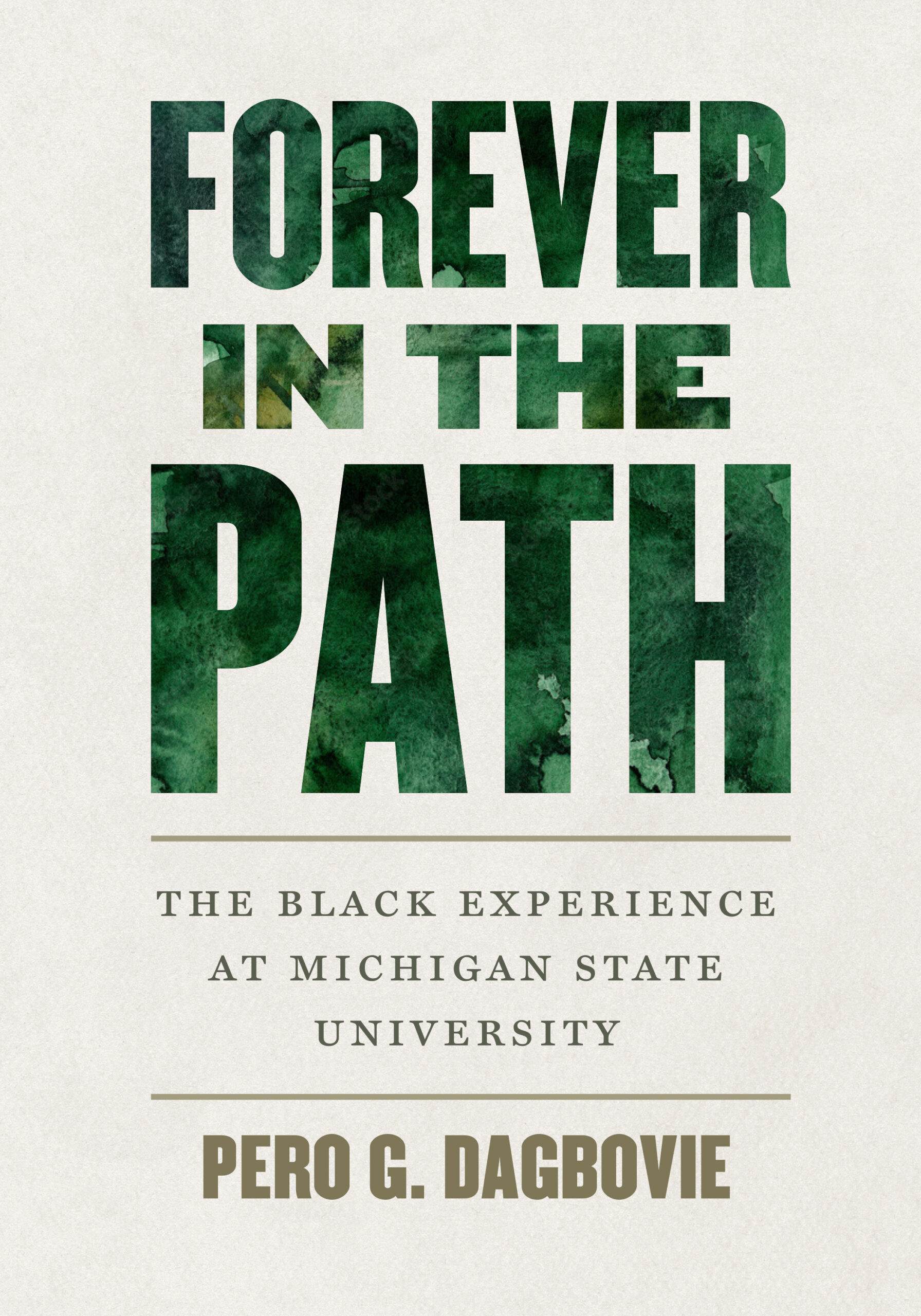
Forever in the Path
The Black Experience at Michigan State University
By Pero G. Dagbovie
$49.95
682 Pages
Forever in the Path: The Black Experience at Michigan State University offers a sweeping overview of the Black experience at America’s first agricultural college from the 1890s through the late twentieth century. In exploring the personalities, important events, and key turning points of Black life at the university, this book deftly blends intellectual history, social history, educational history, institutional history, and the African American biographical tradition. Pero G. Dagbovie depicts and imagines how his numerous subjects’ upbringings and experiences at the institution informed their futures, and how they benefitted from and contributed to MSU’s vision, mission, and transformative role in the history of higher education.
Michigan State University—founded in 1855 as the Agricultural College of the State of Michigan—has a fascinating past, a history shaped by vacillating local and national contexts as well as by people from different walks of life. The first Black students arrived on campus during the late nineteenth and early twentieth centuries, and the first full-time Black faculty member was hired in the late 1940s. Before and after the modern Civil Rights Movement, African Americans from various backgrounds were transformed by MSU while also profoundly contributing in vital ways to the institution’s growth and evolving identity.
Purchase Forever in the Path Here
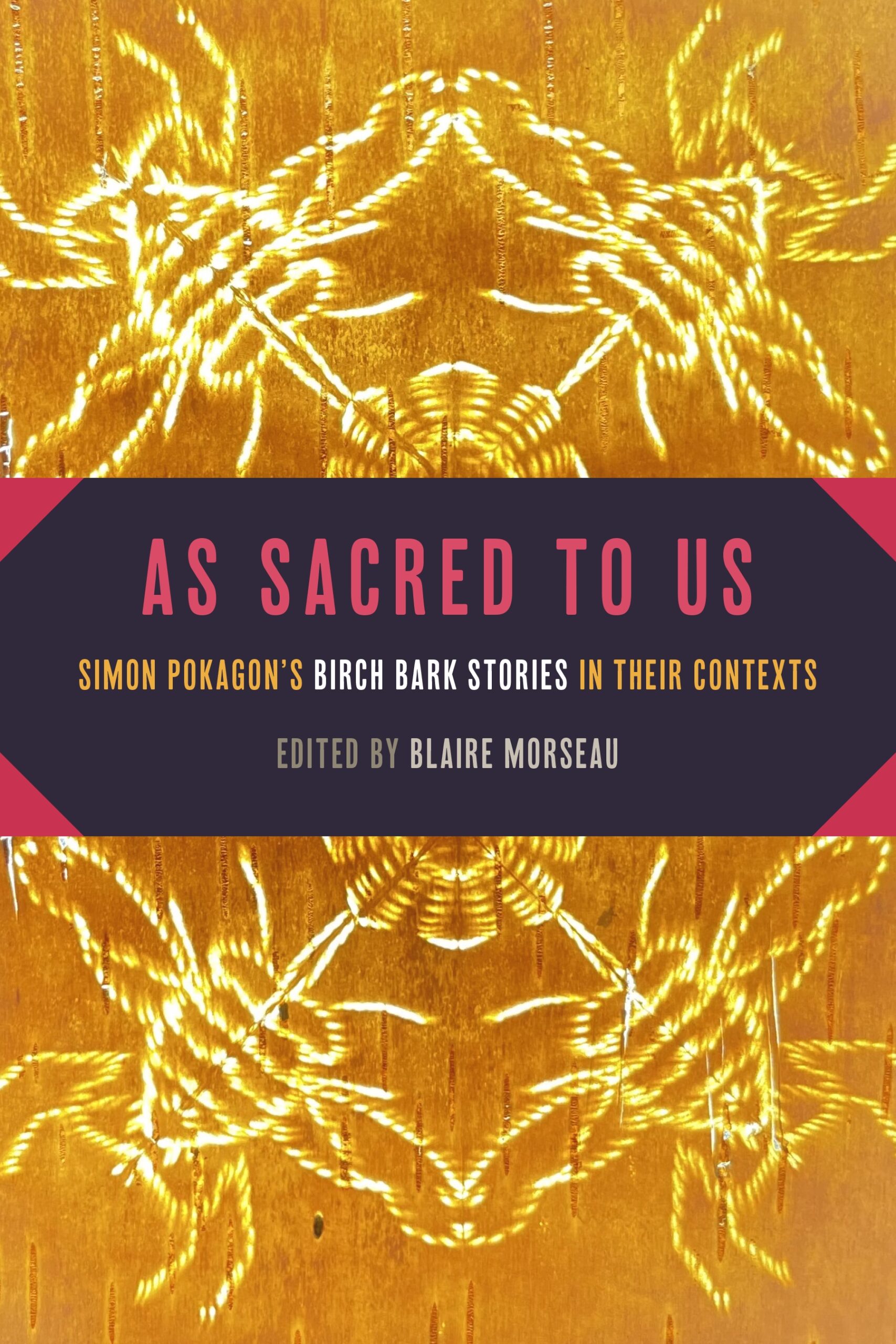
As Sacred to Us
Simon Pokagon’s Birch Bark Stories in Their Contexts
Edited by Blaire Morseau
$24.95
166 Pages
Originally published in 1893 and 1901, Simon Pokagon’s birch bark stories were printed on thinly peeled and elegantly bound birch bark. In this edition, these rare booklets are reprinted with new essays that set the stories in cultural, linguistic, historical, and even geological context. Experts in Native literary traditions, history, Algonquian languages, the Michigan landscape, and materials conservation illuminate the thousands of years of Indigenous knowledge that Pokagon elevated in his stories. This is an essential resource for teachers and scholars of Native literature, Neshnabé pasts and futures, Algonquian linguistics, and book history.

Wrecked
The Edmund Fitzgerald and the Sinking of the American Economy
By Thomas N Nelson and Jerald Podia
$29.95
222 Pages
Wrecked links the story of America’s most infamous shipwreck to the story of an even larger disaster—the wreck of the American industrial economy. When the Edmund Fitzgerald went down in a Lake Superior storm on November 10, 1975, more was lost than the ship and the twenty-nine lives on board. The disaster was a human tragedy as well as an indictment of the American industrial policies that eventually cost the nation thousands of jobs and marooned hundreds of communities. Written with a passionate yet factually grounded intensity, Wrecked shows that the reasons for the decline of industrial manufacturing in the upper Midwest are linked to why the Edmund Fitzgerald sank, and to the legal turmoil that followed for the victims’ families. The book conveys the sense of loss that still is felt by those affected, along with the outrage over the disappearance of manufacturing jobs and the inadequate maintenance and legal maneuvering over liability for the sinking of the ship. What follows is a fascinating critique of what went wrong and why.

Mes Confitures
The James and Jellies of Christine Ferber
By Christine Ferber
$29.95
287 Pages
Chefs throughout the world have long prized the rare and delicious creations of France’s Christine Ferber—an internationally known master patissière who has worked with culinary luminaries Alain Ducasse, the Troisgros family, and Antoine Westermann. For the first time, English-language audiences have access to her artistry with the publication of the French bestseller, Mes Confitures: The Jams and Jellies of Christine Ferber. Written in a clear,accessible style, Mes Confitures brings hand-made jams to life for home cooks and professional chefs alike.
In Mes Confitures, Ferber opens her personal recipe book, sharing such treasures as Black Cherry with Pinot Noir, Apricot and Spiced Apple, and Rosehip and Vanilla. Organized seasonally, uncommon recipes like Rhubarb with Acacia Honey and Rosemary, or Banana, Orange, and Chocolate jams raise the craft of confiture to a new level. Ferber also divulges her secrets, identifying the proper tools and equipment for foolproof, exciting, and unusual creations.
Ferber’s use of locally grown, extraordinary ingredients, most of which are accessible in farmers’ markets, gourmet foodshops, or by mail-order, makes for exquisite jams that are far more interesting than the everyday. Ferber’s jams are artisanal in their reliance on seasonal fruits, traditional techniques, and their emphasis on simplicity and freshness.

Babimose
The Wanderer
By Peter Razor
$29.95
178 Pages
Set against the backdrop of the French and Indian War in the 1750s, this book expands on the legend of Babimose. The legend was passed down as an oral history among Indigenous peoples until it was recorded by a traveling historian who was among the northern Wisconsin Ojibwe in the 1850s. The story recalls a gifted Anishinaabe boy who lived south of Gichigami, now known as Lake Superior, who independently traveled among Indigenous nations. The original story was recorded as a one-page description of Babimose; this book expands on this to explore the language barriers and cultural differences that Babimose would have encountered on his journey. The lessons he learned about people and their resilience in the region still offer lessons for readers today.

Mid-Michigan Modern, Expanded Edition
From Frank Lloyd Wright to Googie
By Susan J. Bandes
$39.95
436 Pages
Featuring 36 new illustrations
From 1940 to 1970, mid‐Michigan had an extensive and varied legacy of modernist architecture. While this book explores buildings by renowned architects such as Frank Lloyd Wright, Alden B. Dow, and the Keck brothers, the text—based on archival research and oral histories—focuses more heavily on regional architects whose work was strongly influenced by international modern styles. The reader will see a picture emerge in the portrayal of buildings of various typologies, from residences to sacred spaces. The automobile industry, state government, and Michigan State University served as the economic drivers when the mid-Michigan area expanded enormously in the growing optimism and increasing economic prosperity after World War II. Government, professional associations, and private industry sought an architectural style that spoke to forward‐looking, progressive ideals. Smaller businesses picked a Prairie style that made people feel comfortable. Modernist houses reflected the increasingly informal American lifestyle rooted in the automobile culture. This expanded paperback edition adds over twenty architect-designed residences along the various rivers and creeks that traverse the area as well as on man-made lakes, and introduces several popular architectural designers not previously discussed. The epilogue briefly considers disappearing modernist inventions and buildings. With a detailed narrative discussing more than 150 buildings and enriched by 186 illustrations, this text is a vibrant start at reclaiming the history of mid-Michigan modernist architecture.
Purchase Mid-Michigan Modern, Expanded Edition Here

Twelve Twenty-Five
The Life and Times of a Steam Locomotive
By Kevin P. Keefe
$49.95
248 Pages
The against-all-odds story of a World War II–era steam locomotive and the determination of two generations of volunteers to keep it running comes alive in Twelve Twenty-Five: The Life and Times of a Steam Locomotive.
Pere Marquette 1225 was built in 1941 at the peak of steam locomotive development. The narrative traces the 1225’s regular freight service in Michigan, its unlikely salvation from the scrapyard for preservation at Michigan State University, and the subsequent work to bring it back to steam, first by a student club and later by a railroad museum. Milestones along the way include 1225’s retirement in 1951, its donation to MSU in 1957, its return to steam in 1988, a successful career hauling tens of thousands of excursion riders, and its starring role in the 2004 movie The Polar Express. The massive infrastructure that supported American steam locomotives in their heyday disappeared long ago, forcing 1225’s faithful to make their own spare parts, learn ancient railroad skills, and interpret the entire effort for the public. As such, the continuing career of 1225 is a triumph of historic preservation.
Purchase Twelve Twenty-Five Here

Michigan State University Collection
Read about the evolution of Michigan State University from Michigan Agricultural College, to Michigan State College to the major research institution it is known as today.

The Evolution of a Land-Grant Philosophy 1855–1925

John Hannah and the Creation of a World University, 1926–1969

The Rise of a Research University and the New Millennium, 1970–005
Michigan Books
Michigan stories have often been the focus of MSU Press, from books that brought long-forgotten stories into the present to modern explorations of the depths of the Great Lakes.


